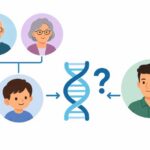


Paternity fraud, sometimes grouped under the wider term parental fraud, is when a man is led to believe he’s a child’s biological father, whether by a lie or by an honest error. That belief creates real legal obligations like child support, custody and parental rights, all resting on a biological fact that may be wrong. A DNA test is the simplest safeguard, because it gives scientific proof of biological parentage before the obligation is locked in.
Legal DNA testing done through an accredited lab produces results a court can accept as evidence. Getting the biological facts early can spare a man years of financial and emotional damage, whether the cause was a false claim or a sincere misidentification.
What DNA evidence can actually do
- Near-perfect accuracy: Modern tests compare genetic markers between the alleged father and the child and typically report a 99.99 percent probability of paternity when he is the father.
- Y-chromosome analysis: Markers passed down the male line are strong indicators of a biological relationship.
- Court-ready paperwork: Accredited labs produce documentation courts can accept as valid evidence.
- Early confirmation: Testing before binding obligations are set means the truth is on the table first.
- Clear exclusion: If the tested man isn’t the father, the result rules him out.
- Chain of custody: Samples collected professionally keep the result usable in court.
How Common Is Paternity Fraud? Rates and Statistics
This is the question most people really want answered, and it’s where a lot of myths live. There’s no official national count of paternity fraud in the United States, because nobody tracks it. The numbers we do have come from research studies and lab testing data, and they measure slightly different things. That’s why one figure can look very different from another.
| Source or measure | What it looks at | Roughly what it found |
|---|---|---|
| Review of published studies (Bellis and colleagues, 2005) | Babies in the general population whose biological father differs from the presumed father | Median of about 3.7 percent, with a wide range across studies |
| Same review, men with high confidence in paternity | Typical couples with no doubts | About 1.7 percent |
| Same review, men who had doubts | Men who sought testing because they were unsure | About 30 percent |
| Accredited lab reports (AABB) | Relationship tests where a man’s paternity was in question | Roughly a quarter to 30 percent excluded the tested man |
| Genealogy and Y-chromosome studies | Long family lines in Europe | Around 1 percent per generation |
What percent of babies are not their fathers? For the general population, the best research points to a low single-digit percentage, usually somewhere between 1 and 4 percent. The famous 10 percent figure you see online isn’t backed up by solid data.
What percentage of paternity tests are negative? Closer to one in four, sometimes a bit more. That number looks alarming, but it’s a skewed sample. People who order a paternity test usually already have doubts, so you’d expect far more negatives than in the general public. It also means roughly three out of four tests confirm the man is the father.
So what’s the real paternity fraud rate? Probably low in the overall population and much higher among men who had a reason to question. Treat any single statistic with caution, and check what group it actually measured.
Why Paternity Fraud Happens: Common Causes
Not every case is a lie. These are the usual ways a man ends up named as the father when he isn’t:
- A deliberate false claim. The mother knows, or strongly suspects, that someone else is the father and names a different man.
- Honest uncertainty. If there was overlap between partners around conception, a mother may truly not know.
- Marriage presumption. In many states, a husband is legally presumed to be the father of a child born during the marriage, even when the biology says otherwise.
- Signing an acknowledgment too quickly. Many men sign a voluntary acknowledgment of paternity at the hospital without testing, assuming it’s a formality.
- Lab or clinic errors. Rare, but sample mix-ups and clerical mistakes do happen, including in fertility and donor situations.
Woman Lying About Paternity: Deliberate Lies vs. Honest Mistakes
When people search for a woman lying about paternity, they’re usually picturing a calculated deception. That does happen, but it’s not the only story. Motives can range from financial worry and fear of losing a relationship to pressure from family, or simply hoping the biological father isn’t the man she’s with.
Honest mistakes are common too. Some mothers genuinely don’t know, and some assume the man who was around is the father. This matters because the right response is different. If it was a deliberate lie, a man may have grounds to challenge in court. If it was an honest error, a calm test is often the fastest way to get clear answers and avoid a long fight.
If you’re unsure either way, test first and talk later. The result tells you where you stand before anyone accuses anyone.
Maternity Fraud and Parental Fraud: What the Terms Mean
Parental fraud is the broad umbrella. It covers any false claim about who a child’s parents are, and paternity fraud is its best-known form.
Maternity fraud is less common and means different things depending on the situation. It can refer to a woman falsely claiming to be a child’s mother, to a faked pregnancy used to get benefits or leave, or to a mix-up at a hospital or fertility clinic. A maternity test works the same way as a paternity test, comparing the child’s DNA with the woman’s, and it can settle the question with the same level of certainty.
At What Point Should You Test Your DNA If You Suspect Paternity Fraud?
The sooner the better, ideally before you sign any paperwork admitting paternity, before child support terms are set and before custody is finalized. Doubts and honest misidentification are far easier to settle with a short professional test than with years of court battles.
Once a man has legally recognized paternity, or a court has ordered it, reversing it gets harder and more expensive. The testing at Choice DNA is built to give fast, accurate answers so people can make informed choices before they take on long-term legal and financial commitments. If you’re still pregnant, our non-invasive prenatal paternity test can answer the question before the baby is born, and you can also read about paternity testing without the father.
Common situations that raise doubt
- Uncertainty about exclusivity around the time of conception.
- Physical differences, such as a child who doesn’t resemble the family at all.
- A partner’s admission of other relationships near conception.
- A separation with an unclear conception timeline.
- Custody or child support cases that need biological verification.
- Family doubts based on visible differences.
- Personal doubt that won’t go away and that a test would put to rest.
How Accurate Is Paternity DNA Testing?
Modern paternity testing is extremely precise. When the tested man is the biological father, labs typically report a probability of 99.99 percent or higher. When he isn’t, the result is a 100 percent exclusion. That’s why DNA testing is the gold standard for settling paternity fraud questions. Labs compare 16 or more genetic markers between the alleged father and the child.
When the markers match across every location tested, the result is considered decisive by courts and legal professionals alike. If you want to understand what the number really means, read what a 99.99% probability of paternity actually means. And if a result ever comes back unclear, our guide on what causes an inconclusive DNA test result explains why and what to do next.
Paternity Fraud Consequences: Legal, Financial and Emotional
Leaving paternity unverified carries consequences that can follow a man for decades. Without DNA confirmation, he can be bound to 18 or more years of child support based purely on a false assumption. In many states, once a man signs a birth certificate or acknowledgment, or a court enters an order, it’s very hard to undo it, even if a later test shows he isn’t the father. Some courts also put the child’s established relationship ahead of biology, so late challenges often fail. DNA testing works best as a preventive step, taken before legal status is set, rather than a cure after the fact.
Child support and custody
- Long-term financial liability: 18 or more years of child support based on false biological information.
- Hard to overturn: Courts may keep a paternity order in place even after DNA proves non-paternity, especially if a parent-child relationship was formed.
- Custody problems: A man can lose or gain custody rights on a mistaken premise.
- Legal costs: Fighting an established paternity order is expensive.
- Interstate issues: Orders that cross state lines add complexity.
The human cost
The emotional damage often outlasts the money problems. A man can feel betrayed, grieve a bond he thought was real and struggle with trust. The child can be hurt too, losing a father figure or finding out late in life, and learning the real biological father’s medical history can matter for health reasons. Breaking up a familiar parent-child relationship affects everyone involved, including the mother and the extended family.
Is Paternity Fraud a Crime?
Is paternity fraud a crime? In most US states, there’s no single criminal offense called paternity fraud, so naming the wrong man isn’t usually prosecuted on its own. That surprises a lot of people.
That doesn’t mean there are never criminal or civil consequences. Related conduct can cross the line. Lying under oath in a court filing or a signed paternity affidavit can amount to perjury, and knowingly using a false paternity claim to get public benefits or support can bring fraud charges. On the civil side, some states let a man sue for fraud or misrepresentation, and a handful allow him to recover some child support he paid. Many states don’t allow refunds of past support at all.
Rules differ widely from state to state, and the deadlines can be short. If you’re in this situation, a family law attorney in your state is the right person to ask about paternity fraud crime questions and your options.
What to Do If You Suspect or Discover Paternity Fraud
- Don’t sign anything yet. A voluntary acknowledgment of paternity has legal weight, and federal rules generally give you a short window, often up to 60 days, to cancel it.
- Get a test. A home test kit can give you personal clarity, but only a legal test with a documented chain of custody is accepted as court evidence.
- Keep records. Save messages, dates, the birth certificate and any paperwork you’ve signed.
- Talk to a family law attorney. Ask about your state’s deadlines for challenging paternity and whether you can seek relief.
- Take care of yourself. This is a heavy thing to go through, and talking to a counselor can help, whatever the result turns out to be.
Pregnancy and Doubts? Resolve Them With Paternity Testing
If you’re worried about paternity during pregnancy, you don’t have to wait for the birth. Our team can walk you through your options, from prenatal testing to standard DNA paternity testing after delivery.

Conclusion
If you have doubts about paternity, or you’ve been hit with a false paternity claim, a proper DNA test is the single most useful step you can take to protect your legal and financial rights. Our accredited lab at Choice DNA offers professional legal DNA testing with results of 99.99 percent accuracy that are court admissible. Samples are collected professionally and kept confidential, so your results are reliable and legally defensible whenever you need them.
Frequently Asked Questions
How common is paternity fraud?
There’s no official US count. Studies point to roughly 1 to 4 percent in the general population, and a much higher share among men who already had doubts.
What is the paternity fraud rate in the United States?
No one tracks it nationally, so any single paternity fraud rate is an estimate. Treat statistics carefully and check who was actually measured.
What percentage of paternity tests are negative?
Around a quarter to 30 percent in accredited lab data, but those are people who had doubts to begin with, so it isn’t the same as the general population.
What percent of babies are not their fathers?
Likely a low single-digit percentage overall. The 10 percent figure is a myth.
Can a woman be punished for lying about paternity?
Usually not for the lie by itself. Perjury, benefit fraud or civil claims may apply depending on the state and the facts.
What are the consequences of paternity fraud?
A man can face years of child support, custody disputes, legal fees and emotional harm, and the child and mother are affected too.
Is maternity fraud real?
Yes, though it’s rarer. It can mean a false claim to be a mother, a faked pregnancy for benefits or a hospital mix-up, and a maternity DNA test can settle it.