
Touch DNA is admissible in court only when it is collected, handled, and tested properly. It sound like it is a large, complicated concept, but it is in fact very simple. Imagine invisible clues that are left behind when anyone touches something, that’s what touch DNA is. Courts give weight to this evidence, but also have rules to ensure that the evidence is reliable before it is presented to a judge or jury. Let’s go over this one by one; it’s not so complicated.
Can Touch DNA be used as court evidence?
Touch DNA is accepted in court as physical evidence such as fingerprints and blood in numerous courts throughout the country. Case-by-case decisions are made by judges taking a detailed look at the manner in which the sample was collected and tested. The process will be taken through to the end if proper steps are followed, and touch DNA can be presented to a judge or jury and be accepted as a credible piece of evidence. That’s why every aspect of the process, ranging from the crime scene to the lab, should be treated with great care.
Touch DNA and Court Admissibility
What is touch DNA? It’s the little skin cells that remain when a person touches something, such as a doorknob or a weapon. This evidence often is valid in court because it connects a person to a scene as long as contamination and handling errors did not happen during testing.
What factors can affect whether touch DNA will be useful in a legal case?
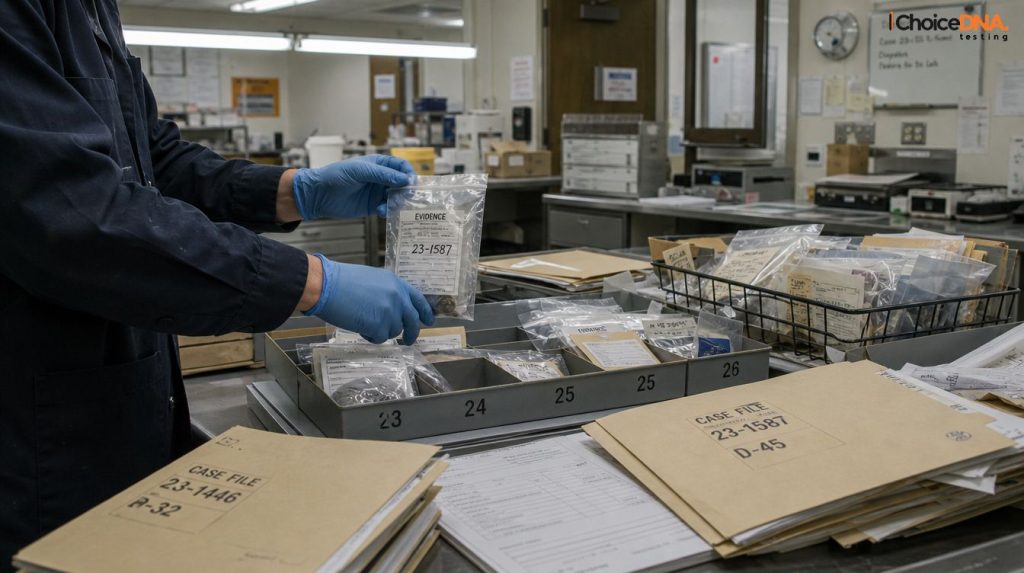
There are a number of factors that determine whether touch DNA is admissible in a legal case, such as the manner in which the DNA sample was collected, stored, and tested. Chain of custody records and lab accreditation are also important. Even if a strong DNA match is initially found, the evidence can be challenged at trial if any of the steps fail. So, it’s important to handle carefully and document the handling as well as the science.
Standing Rules for Admissible Touch DNA Evidence
- Use sterile, sealed tools for proper collection
- A chain of custody process maintained throughout clear.
- Laboratory testing done at an approved laboratory.
- No contamination during collection or handling
- Results checked and verified by qualified professionals
How is Touch DNA Collected and Preserved for Use in Court?
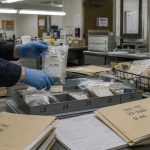
Touch DNA is obtained by gently removing cells from surfaces with swabs, tape lifts or sterile instruments. All samples are collected, sealed, labeled and placed in controlled conditions to minimise contamination. This meticulous procedure makes a sample safe to use and reliable even after a scene has been cleared, often for many years.
Touch DNA Collection and Preservation
- Using swabbing or tape lifting from surfaces that have been touched
- Cleaning or disinfecting all sampling tools each time they are used on a sample
- Packing samples in properly labeled containers.
- Where samples need to be stored at controlled temperatures.
Then, how long does touch DNA last? Proper preservation is crucial if DNA is to be used in the future, for court or any other review, as touch DNA can last a long time if it is preserved correctly.
In legal proceedings, how accurate and reliable is touch DNA evidence?
When done properly in a scientific manner, touch DNA is a dependable source of evidence, but it has its limitations. Results can sometimes be difficult to interpret, due to small sample sizes, and mixed profiles can be obtained when more than one person touched the same surface. Of course, these restrictions do not render touch DNA useless, but rather underscore the importance of being adept at handling. By working only with CAP accredited laboratories, Choice DNA can help ensure that all of their testing is at the standards that courts expect, and that families and legal teams can trust.
Accuracy and Reliability of Touch DNA
The accuracy will be a function of carefulness of sample collection and processing. Laboratories that adhere to strict standards and have the proper accreditation are more likely to provide reliable, defensible results, which are important when evidence is presented in a courtroom environment where every word and detail matters.
How does this fit into Forensic Testing
Questions such as this frequently trigger the wondering: when does one need forensic testing, or what is forensic DNA testing, at all. But in reality, forensic testing isn’t just applied in the dramatic court case. It also has a part to play in more commonplace events where he or she simply requires a straightforward and reliable answer that he/she can rely on. In addition to touch DNA, Choice DNA offers paternity DNA testing services for families in search of clarity and forensic test services that are compliant with the legal requirements of cases. Every sample is processed equally, from beginning to end, and every result is supported by appropriate lab accreditation, thorough documentation and expert review.
Conclusion
Can touch DNA be used in court? Yes, if collected, preserved, and tested properly. Every step along the way is important from collection to lab review. When accuracy matters the most, Choice DNA facilitates this process with the use of accredited forensic and paternity testing services to ensure results that people can rely on.