Discreet paternity test is a private DNA test which can assist you discover who the kid’s biological father is whilst keeping the process confidential. Consider it a private chat with a lab! The question of fatherhood can be very personal and weighty. It’s okay to need the truth before you even share it with others. How does a discreet paternity test work? It requires a clear and easy-to-understand answer. This blog answers the most popular questions people ask about private, discreet DNA paternity testing.
How does a discreet paternity test establish whether a man is a child’s biological father?
Children receive 50% of their DNA from their mother and 50% from their father. A discreet paternity test is used to find out which half. The lab is used to match the child’s DNA to the possible father’s DNA. If one half matches, he is quite possibly the father.
How is a discreet paternity test different from other DNA tests?
The science remains the same; the purpose is personal. It is created to answer only one question: biological fatherhood. It does not evaluate health, disease susceptibility or ancestry. It also doesn’t rely on appearances, blood type or family tales. This test is often taken to have the peace of mind needed to make major decisions for the family unit. Those who ask the question, “How Does an At Home Paternity Test Work?” will discover that the private version in essence does the same basic thing, but there is added confidentiality at every step.
How to book a paternity DNA test without telling other family members?
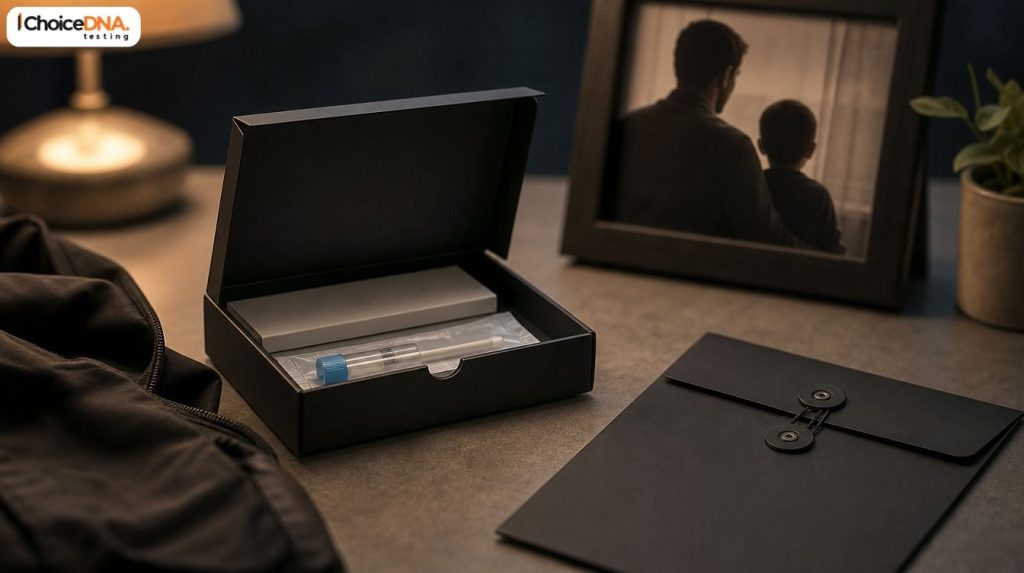
A kit is available online, and samples can be taken at home and mailed in. No visits to doctors or clinics are required. No one knows unless you tell them. This type of privacy-conscious DNA testing gives you control of every aspect, from ordering to reading the final report.
Controlling Sample Collection and Communication Privately
Wondering how to get a private paternity test? These are some easy steps you can take to keep your information private.
- Choose the delivery: Ship to a work address, a friend’s home or a pickup location.
- No DNA logos: Many kits come in simple boxes.
- Private contact info: Only check email and phone number from someone you know.
- Storage: Please store the kit in a private drawer until use.
- Time of collection: Choose a quiet time, when no one else is at home.
- Secure results: Use a strong password with online results rather than paper results that will be mailed.
- Payment: Some people pay with a card which they alone use.
What type of DNA samples can be used for discreet paternity testing and what is the method for collecting these DNA samples?
The majority of tests are carried out using a swab from the inside of the cheek, the most convenient and reliable sample. Some laboratories will take certain common objects that contain DNA if a swab cannot be taken. The other samples are less reliable, are typically more expensive, and are best selected by a professional.
Comparing Cheek Swabs and Other Sample Types
| Sample Type | How It Is Collected | Helpful Tip |
| Cheek swab | Rubbed inside the cheek for about 30 seconds | No food or drink 30 minutes before |
| Hair with roots | 5 to 10 strands pulled, not cut | The root is where the DNA is |
| Toothbrush | Used by one person for several weeks | Let it dry before packing |
| Fingernail clippings | Fresh, clean clippings | Avoid nails with polish |
| Chewing gum | Chewed gum, dried first | Wrap in paper, not plastic |
| Cigarette butt | Only the filter end | Keep it separate from others |
How accurate are discreet paternity tests, and can confidential testing provide reliable results?
What is the probability of getting a false positive result with a discreet paternity test? If you have good samples and proper labelling, the results from a laboratory that has been accredited will be reliable and easy to understand. Rather, accredited labs may repeat testing for each sample prior to releasing the results. The most dangerous mishaps are usually those that happen at home with weak samples, rather than in the laboratory.
DNA Analysis and Probability of Paternity
In the lab, scientists study about 20 or more special spots in the DNA, called genetic markers. At each marker, they side-by-side the child and the man. If all markers match, the report will include a number that is referred to as the Combined Paternity Index (CPI) and a probability of paternity of 99% or higher. The greater the CPI number, the more supportive of fatherhood. If there are a few markers that don’t fit, then the chances are 0% and the man is definitely out. The mother’s sample will increase the likelihood of the lab finding origin of the pieces, so the analysis will be stronger and more clear.
How is a discreet at home paternity test different to a legal paternity test?
Discreet at-home test: This is a test that you can take at home without the assistance of a healthcare provider. A legal test is designed for use by the officers, and collection and identification is done by a neutral, trained individual. The best one depends primarily for the use of the final results.
| At-Home Discreet Test | Legal Paternity Test |
| Ordered online and shipped to you | Scheduled at an approved collection site |
| Accepts some non-standard samples | Usually accepts cheek swabs only |
| No paperwork beyond the order | Photos of each person go in the file |
| Results go only to you | Results may go to courts or agencies |
| Faster to start | Takes more planning |
| Often lower in cost | Often higher in cost |
When Identity Verification and Chain of Custody Matter
These are common examples of How Paternity Tests Are Used in Legal Cases.
- Chain of custody: A written record is maintained from sample collection to the laboratory, to guard against sample exchange.
- Child support: Prior to setting child support, there must be some kind of legal proof.
- Custody and visitation: Legal outcomes can help an attorney of a parent request.
- Name change for birth certificate – legal testing may be needed to add or change a father’s name.
- Immigration: Legal family ties (DNA) required for some visa applications.
- Inheritance: Legal results may be required for estate claims.
- Make preparations: A home result won’t be a legal one unless there is court involved, so select legal testing if court is involved.
Is there a way to do a paternity test without the man’s consent or knowledge?
This is dependent on your residential area. Some sites may accept samples that have been discarded and some may need the consent of all adults tested. Using someone’s sample without permission may break the law in some areas. Please review local rules prior to collecting and sending any DNA samples.
Consent, Sample Ownership, and Legal Considerations
- Minors: Consent is typically assumed for a child by the parent/legal guardian.
- Consent laws: Consent laws are different in different countries, e.g., the United Kingdom.
- Ownership of samples: Things such as toothbrushes can still be considered the property of the person who owned them.
- Lab policies: Some labs require you to show that you are authorized to submit each sample.
- Seek advice: If in doubt, consult a family lawyer.
- Family impact: Consider the impact of results for all members of the family, including the child.
At Choice DNA we have an easy-to-understand consent policy you can read before ordering, and samples are sent to our AABB-accredited laboratory partners.
Conclusion
Private questions deserve private answers. A discreet paternity test gives you accurate, confidential results without involving a doctor or clinic, as long as you use good samples, an accredited lab, and the consent of every adult being tested. If you might need the results for child support, custody, immigration, or inheritance, choose a legal paternity test from the start, because home results aren’t accepted in court.
At Choice DNA, every test is processed by our AABB-accredited laboratory partners, and your results are released only to you. If you’re unsure which test is right for your situation, our team can help you decide. Order your discreet paternity test or contact Choice DNA today.