
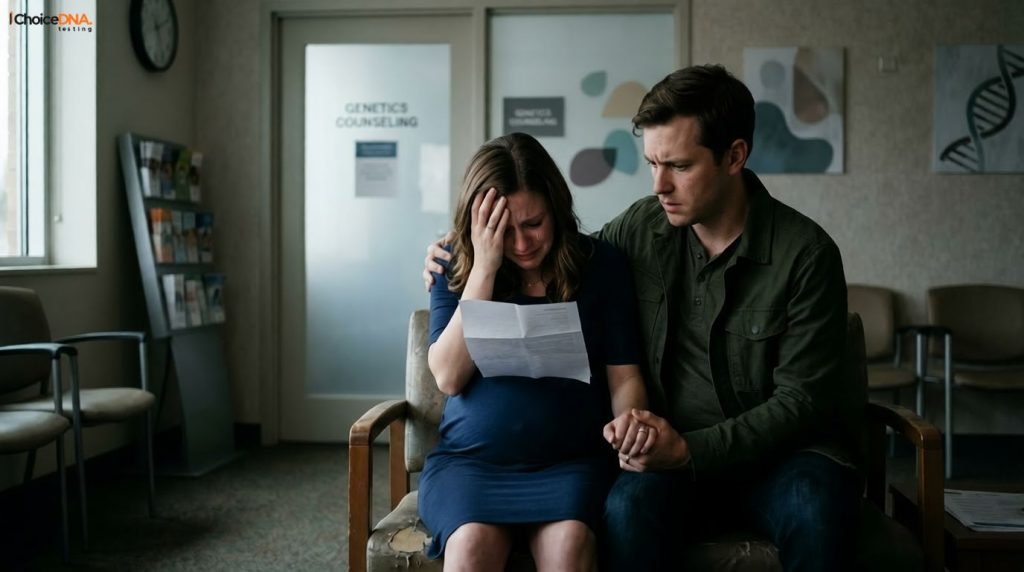

An NIPT test result that comes back unexpected can turn one of the most exciting times in a person’s life into one of the most anxious and understanding what that result actually means is the first step toward clarity. Non-Invasive Prenatal Testing (NIPT) is a strong screening test, but not a diagnostic test. This distinction is not fully understood until an unexpected result occurs, which is why many parents do not fully appreciate it. This blog will explain why unexpected results occur, what they actually are, and what to do to get closer to a clear and informed answer.
Why Can an NIPT Result Turn a Reassuring Pregnancy into a Time of Uncertainty?
An NIPT tests for chromosomal differences, using small pieces of fetal DNA in the mother’s blood. It is a screening test, NOT a diagnostic test. That’s a huge difference. The result of a high-risk NIPT does not necessarily indicate a condition. It indicates an increased risk and additional testing is advised. NIPT test results confusion often arises because parents receive a high-risk report without any context as to what this means and doesn’t mean, leading to confusion. It’s important to realize that when a woman undergoes NIPT screening, she is not undergoing a test to get a definitive answer, but a test to detect risk.
The limitations of screening results.
- NIPT is a screening test, NOT a diagnostic test; it will NOT provide a definitive diagnosis of a chromosomal condition.
- The high risk result does not imply that the child has the condition but rather there is an increased likelihood of it and should be confirmed.
- The NIPT screening accuracy depends on the type of screening being performed and risk and age of the individual.
What are considered “unexpected” or “inconclusive” NIPT results?
Not every NIPT test is either “positive” or “negative.” There’s a number of different types of results that can leave parents feeling uncertain and each different result has a different implication as to what to do next.
No-Call Results, False Positives and High-Risk Findings
- High risk: The test identified patterns that are associated with a chromosomal condition, such as Trisomy 21, 18, or 13. It does not diagnose the condition. The frequency of false positive or negative results for NIPT, how often is NIPT wrong, in this category depends on the condition being tested and maternal age. False positive results are higher for rare conditions, so confirmatory diagnostic testing is always suggested prior to major decisions based on a positive test result.
- No call/fail result: If the fetal DNA level in the mother’s blood sample is too small to be detected, the result is said to be a no call/fail result. This occurs during early pregnancy or as a result of maternal factors. There is immediate confusion when a no call result is obtained as parents have no answer and need to have the test repeated or an alternative method undertaken.
- Variant of uncertain significance: In a few cases, a chromosomal variation is identified, but its clinical significance has not yet been determined. The results obtained are indeed inconclusive and need the aid of a specialist and further testing to be interpreted correctly.
What is the difference between NIPT screening tests and diagnostic tests such as CVS and Amniocentesis?
It’s crucial for any parent facing an unexpected NIPT result to understand the distinction between a screening test and a diagnostic test. They provide different levels of certainty, have different risks attached and are used for different purposes.
The NIPT screening accuracy is good as a primary screening tool but when results are unexpected, the table below is clear evidence that a diagnostic test is the next step and not the last.
| Feature | NIPT Screening | CVS / Amniocentesis |
| Test type | Screening | Diagnostic |
| Sample source | Maternal blood | Placental tissue / amniotic fluid |
| Timing | From 10 weeks | 10–13 weeks / 15–20 weeks |
| Accuracy | High but not definitive | Near 100% diagnostic accuracy |
| Confirms diagnosis | No | Yes |
| Procedure risk | No, it’s non-invasive | Small procedural risk |
| Best used for | Initial risk assessment | Confirming NIPT findings |
| Result clarity | Probability-based | Definitive chromosomal answer |
What does additional clarity mean after an unexpected NIPT result?
After NIPT test results confusion, other prenatal DNA testing can give much more clarity and it’s a reassuring step for many families that replaces anxiety with actionable information. The bottom line is getting to professional testing via credible pathways and getting the results that you may rely on and communicate with your medical professional competently.
Validating results and supporting informed decisions
- A pregnancy DNA test performed by a CLIA-certified laboratory after an unexpected NIPT result can offer a level of diagnostic confidence. Professional testing provides families with accurate and documented results to support informed conversations with genetic counselors and medical professionals, rather than uncertainty. Whether it’s non-invasive prenatal testing or further testing and analysis of chromosomes, professional testing can help families make informed decisions.
- To deliver DNA testing services to professional clients that conform to the highest scientific accuracy standards, Choice DNA works in collaboration with CLIA accredited laboratories. A skilled provider can guide you through the process of providing this information, how often is NIPT wrong?, and let you know what to expect in certain situations and when you need further testing. Choice DNA also provides paternity DNA testing and forensic DNA testing services for a variety of personal and legal reasons, all of which are performed in a laboratory that is accredited for their services and takes the accuracy, documentation and result integrity seriously.
If the result of your NIPT test is unexpected, seek expert advice before forming any conclusions. The best course of action is to consult a licensed genetic counselor and confirm the diagnosis with an accredited laboratory.

Conclusion
Having an unexpected NIPT result does not mean the end of the world or even the end of waiting in the dark. There are a lot of situations where the results of the NIPT test are confusing, understandable and fixable through the help of the right professionals. While the accuracy of NIPT screening is real, so are its limitations as a screening tool. What follows is what’s really important. Pairing CLIA-accredited laboratory relationships, Choice DNA offers professional prenatal and paternity DNA testing services that help families transition from uncertainty to clarity with the promise of true accuracy.