Yes, there is DNA in urine and if you have the right set of conditions, you can collect and extract that DNA to test it. Many people might be surprised to learn that DNA can be obtained from the blood or cheek swabs. But urine DNA source is more usable than most realize, and science has advanced further to make that happen. This blog provides you with simple, easy-to-understand explanations, whether you are interested in learning about DNA testing, forensic uses, or simply the workings of the human body.
Does Urine Actually Contain DNA That Can Be Used for Testing?
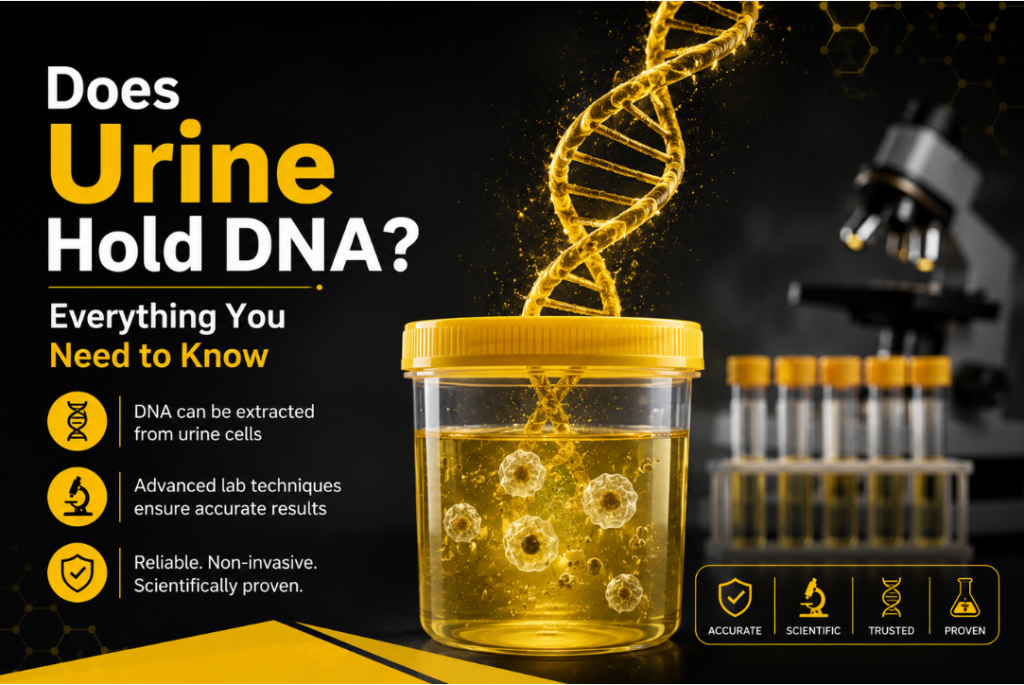
Yes, urine is a fluid waste product and contains no DNA by itself, but contains cells which have been shed from the lining of the urinary tract, which contain DNA. This is why in some test cases, using DNA in urine samples is a scientifically valid option. The amount of DNA is not as high as it is in blood or saliva, but in today’s lab world, DNA can be found in small amounts. If properly collected and rapidly processed, urine can be a valid source of genetic material for qualified testing.
Presence of Cells and Genetic Material in Urine
Shed cells of the lining of the urinary tract are present in urine. These cells contain nuclear DNA which can be extracted and examined in a lab. It is not as high as in blood or saliva, but is high enough for modern genetic analysis if samples are properly handled.
How is DNA extracted from urine samples in a laboratory?
It is more complicated than in blood or saliva, but has been established and reliable when conducted by trained people. Urine samples for laboratories using non-invasive DNA sampling must be collected in a way that ensures that the genetic material recovered is as high quality as possible. Usually, the procedure is as follows:
Collect and Extraction Process Explained:
- A urine sample is collected, often the first morning sample, as it has the greatest amount of shed cells and genetic material compared to urine collected throughout the day.
- The sample is centrifuged in the lab to isolate and concentrate the cellular material from the fluid of urine, leaving the cells with usable DNA.
- The concentrated cells are then treated with chemical extraction techniques, which burst open the cell walls and release the DNA in the nucleus of each cell.
- The extracted DNA is purified to exclude any contaminants that may affect the accurate analysis, followed by amplification to sufficient levels of genetic material for accurate testing using PCR technology.
- Qualified laboratory personnel under strict quality control and the amplified DNA is compared to a reference sample and results are interpreted.
This process is accomplished in a scientific manner, with Choice DNA working with CLIA-accredited labs to ensure that each phase is done with the utmost accuracy and reliability.
Is Urine DNA Testing as accurate as Blood or Cheek Swab DNA Testing?
It is dependable, but with caveats. Urine DNA source is suitable when samples are fresh, suitably collected and rapidly processed. In terms of DNA concentration, it’s not as high as blood or buccal swabs, but it’s not that much different either, and with advances in lab technology, the difference has been closing up. The following is a comparison of the sample types:
A comparison of different types of samples for accuracy.
- Blood samples have the most DNA in them and are the most dependable sample for DNA testing, with results in almost every application of testing.
- The DNA found on buccal cells from a cheek swab is almost as useful as blood, and is the most readily used sample type in routine paternity and relationship testing because it provides a high yield of DNA with little discomfort to the donor.
- Urine as a DNA source contains less DNA and is more susceptible to degradation, but when collected as a first morning void and processed in a timely fashion can result in valid, usable DNA for qualified testing.
- The molecular techniques necessary to extract and trace DNA in body fluids such as urine are more complex than those used for blood, and must be performed in a laboratory by an accredited processor for the results to be credible.
What factors may compromise the quality of the DNA that can be isolated from urine?
There are several conditions that may negatively impact the integrity of DNA in a urine specimen and this is why professional collection and handling is important. The amount of DNA found in urine is already less than in other specimen types, so any further degradation of the DNA will impact the usefulness of the test.
Samples contamination and degradation.
At room temperature, bacterial activity and enzymes break down the DNA in urine samples, resulting in rapid degradation. The concentration and integrity of recoverable genetic material can be greatly diminished by contamination from outside sources, delayed processing, improper storage, or dilution due to excessive fluid intake before collection.
Conclusion
As far as non-invasive DNA samples, urine is a really useful sample especially when you don’t have the right sample type or it’s impractical. Urine samples have been useful in the investigations when there was a lack of or limited biological evidence, as seen in forensic DNA testing services. Professional forensic DNA testing service by Choice DNA, partnering with CLIA-accredited labs, with the same rigorous standards as any other biological source of DNA. The accuracy of results in DNA testing—whether for forensic purposes, or a Relationship DNA Test—depends directly on the expertise of the laboratory handling the analysis and the integrity of the sample provided.