
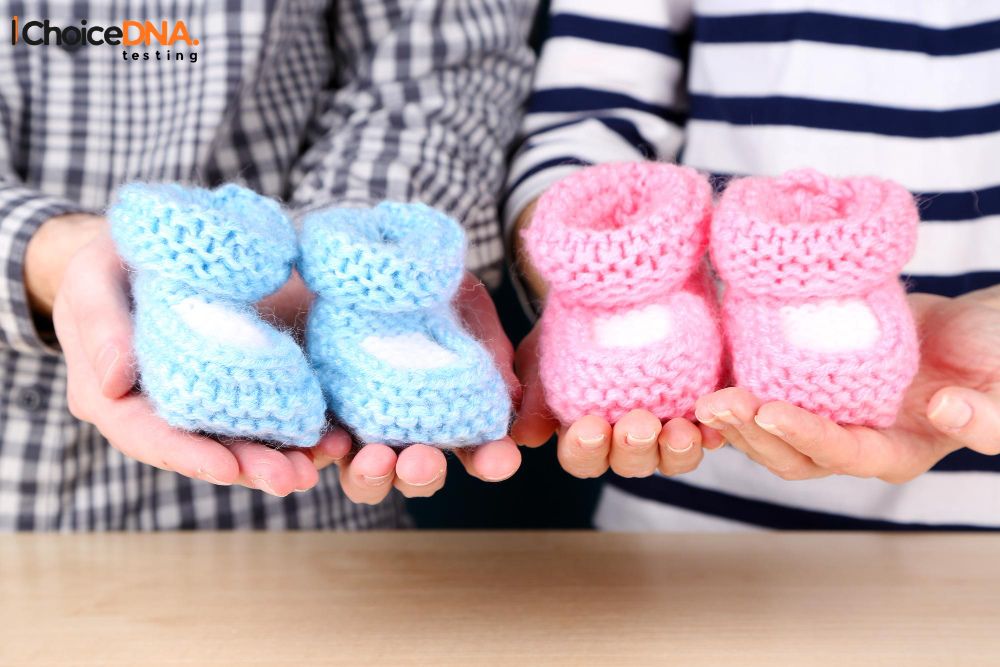

There is twice the excitement when the child is expected to be twins, and twice the inquiries, such as whether non-invasive prenatal testing (NIPT) can correctly identify the gender of both newborns. A significant number of parents will be asking themselves whether the same fetus sex determination test that is so successful with singleton pregnancies is equally as accurate when applied to a two-baby DNA. Knowledge on the ability of NIPT to identify gender at an early age in twin pregnancies and factors which influence the reliability of this tool in gender identification assists in establishing the right expectations in your prenatal process.
Is the NIPT test a good way of determining the gender of twins?
Of course, NIPT is also very precise in the determination of gender in twin pregnancy, but there are several significant constraints in comparison with singleton pregnancy. The consistency of NIPT in gender in twins has a higher accuracy than 99 in male babies (at least one boy), as the existence of Y chromosome DNA is conclusive in the possibility that there are male children present. Nonetheless, in the case of twins, gender detection by NIPT is somehow more complicated due to the inability to always determine whether the DNA of Y chromosomes belongs to one or both infants. In the event that Y chromosome is missing, the test will be very sure that both babies are female. The dilemma with Y chromosome is the diagnosis can be done to be confident that you have one boy but not yet certain that you have one boy and one girl or two boys.
Accuracy Rates and Limitations
- Great sensitivity in male identification: NIPT has a detection sensitivity of more than 99% when the presence of the Y chromosome is being determined, and assures that at minimum one baby of the male sex exists when DNA of the Y chromosomes is found in maternal blood samples.
- Fails to differentiate between boy-girl and boy-boy twins: On finding Y chromosome, NIPT cannot say which one or both twins are male- they can further identify gender through further ultrasound at 18-20 weeks.
What is the difference between the operation of NIPT when there is more than one pregnancy versus a single pregnancy?
The NIPT is done by examining cell-free fetal DNA that is present in the maternal blood, however, in twin pregnancies, this type of genetic screening during pregnancy is difficult. With singleton pregnancies, all fetal DNA is of one fetus and thus is analysis is easy. During twin pregnancies, the maternal blood is a mixture of DNA of the two babies, and the test is not able to distinguish the DNA fragments that belong to each of the babies. This confluence is the reason why NIPT is able to establish the presence or absence of Y chromosome DNA, but not always determine gender of every individual twin when there are males.
Familiarity with Fetal DNA Contributions.
- Combine DNA: NIPT examines the bulk of fetal DNA combined in the maternal blood of the two twins – the test is not able to differentiate which DNA pieces belong to one of the twins A and B.
- Variable DNA contributions: Each of the twins has a different amount of DNA to contribute to the maternal bloodstream, and the level of contribution may differ between pregnancies, with one of the twins significantly contributing more DNA than the other, however, this does not have an impact on the overall test accuracy.
Is NIPT able to determine the gender of individual twins?
Regrettably, NIPT will not be able to determine the gender of each of the two twins individually in the case of detection of Y chromosome DNA. This sex test of fetuses gives conclusive results in the two cases: when the Y chromosome is not detected at all, the two twins are females, and when the Y chromosome is detected, at least one of the twins is a male. Although, NIPT is not able to identify whether the detected Y chromosome DNA belongs to one or both babies, that is, in case of twin pregnancy with male babies, they might need further ultrasound examination at approximately 1820 weeks to identify the sex of the respective babies. Knowledge on NIPT to identify gender at a young age during the twin pregnancy helps parents to understand the opportunities and limitations of this new and high-tech prenatal testing.
Identification of Y Chromosome Presence.
- Male presence: Y chromosome test is conclusive when at least one male baby is confirmed by presence, that is, one boy and one girl, or two boys, and additional ultrasound is required to determine which of these two options applies.
- Absence suggests females: No Y chromosome is detected suggests that the babies are both female with over 99% accuracy – in this case, this is a complete gender information without the need of further testing.
What might influence the accuracy of NIPT gender outcome in twin pregnancies?
- Timing of testing: Timely detection of gender It is dependent on fetal DNA concentration necessitating that testing take place prior to 10 weeks and accuracy increases as the fetus is tested at 10-12 weeks or later.
- Vanishing twin syndrome: When one of the twins prematurely ceases to develop during pregnancy, the remaining DNA of the disappeared twin could be left in the blood of the mother over the course of weeks, which could have an impact on genetic screening of pregnancy outcomes and accuracy of gender determination.
- Fetal DNA fraction: Every baby should supply enough DNA to be analyzed correctly – the final fetal DNA fraction decreases accuracy of NIPT to determine gender, but current methods can gain adequate levels by 10 weeks to yield reliable results.

Conclusion
Learning about the prenatal testing available such as the NIPT in the case of twin pregnancies is a way of making informed choices during your pregnancy period. Choice DNA will inform families about the full DNA testing services and will refer families to certified laboratories providing sophisticated prenatal genetic screening such as fetal sex determination test of singleton and twin pregnancies.